



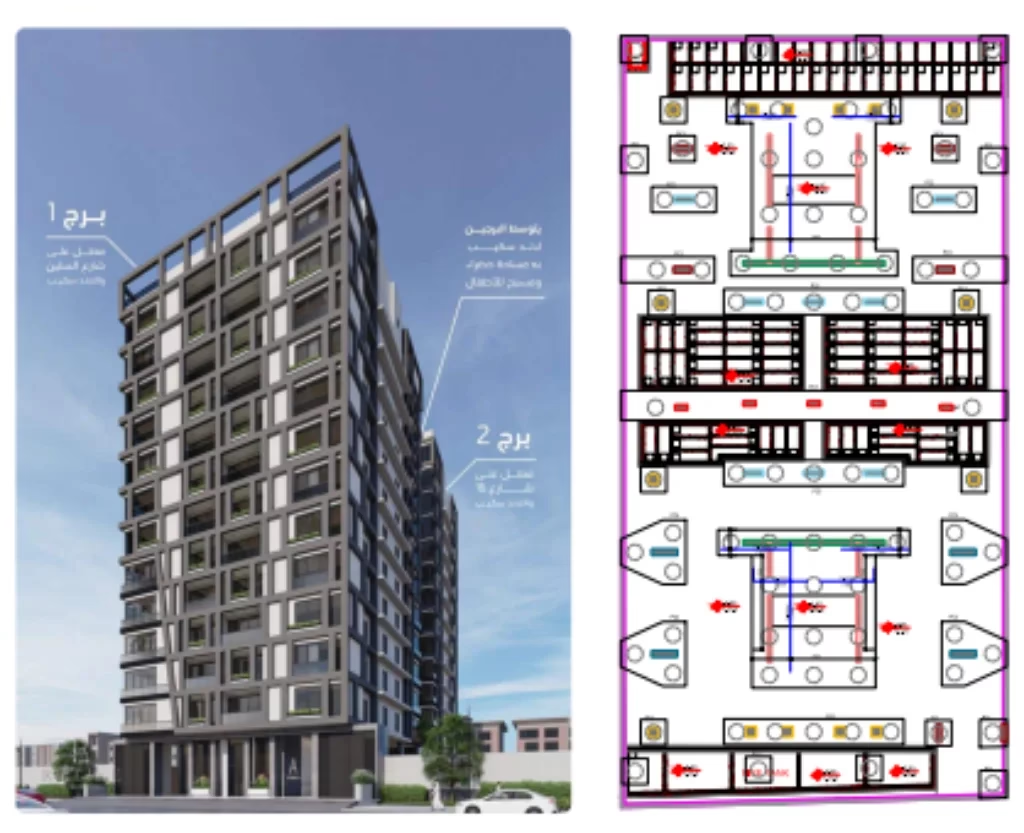
Rotail Residential Twin Towers
State-of-the-art structural design for twin residential towers, spanning a built-up area of 18,000 sqm, utilizing cutting-edge engineering techniques.
Project Overview
The Rotail Project features an advanced structural design for twin residential towers covering a total built-up area of 18,000 sqm. By implementing state-of-the-art engineering technologies, the project achieves optimal structural and economic efficiency. Furthermore, a comprehensive value engineering study was conducted, leading to significant improvements in both design and execution.
🏢
Advanced Residential Twin Towers
Integrated Structural Design for Twin Residential Towers (18,000 Sqm)
📊
Advanced Value Engineering Solutions
A comprehensive study that optimized efficiency and reduced construction costs.
⚡
State-of-the-art Construction Techniques
Post Tensioning System and Deep Foundations with Modern Techniques.
Detailed Project Specifications
| Items | Specifications | Technical Details |
|---|---|---|
| Project Name | Rotial project | Twin residential towers with advanced structural design and cutting-edge technologies. |
| Total Built-Up Area (BUA) | 18,000 m² | Comprehensive built-up area covering tower designs and all site facilities. |
| Structure Type | Advanced Residential Twin Towers | Integrated structural design for twin residential towers utilizing modern construction technologies. |
| Foundation System | Deep Foundations | Deep pile foundations reaching hard soil strata to ensure maximum bearing capacity. |
| Slab System | Post-tensioning | An advanced system that reduces the number of columns and slab thickness. |
| Scope of Work | Value engineering study | Optimizing structural design and reducing material quantities. |
Cutting-Edge Engineering Solutions
Advanced Value Engineering Analysis 📈
Enhancing structural performance and economic viability.
- Significantly reducing steel and concrete consumption.
- Redistributing vertical seismic-resistant elements to maximize structural efficiency.
- Maximizing structural efficiency while reducing construction costs.
- Balancing structural durability and economic efficiency.
Post-Tensioned (PT) Slab System 🔩
Optimizing Horizontal Structural Elements
- Minimizing the number of structural columns to provide spacious, open interiors.
- Achieving slimmer slab thickness while maintaining structural durability.
- Helps achieve greater flexibility in architectural design.
- Optimizing floor space efficiency through advanced structural design.
🏗️ Deep Foundation
Advanced Solutions for Weak Soil Conditions
- Designing deep piles to reach stable hard strata.
- Addressing weak soil challenges at the project site.
- Ensuring long-term structural stability and settlement-free foundations.
- Providing safe and stable foundations for the twin towers.
Engineering Excellence & Technical Highlights
🎯
Maximizing the efficiency of vertical seismic-resistant elements through optimal redistribution.
💰
Reducing steel and concrete quantities while adhering to structural standards.
🏆
Remediating weak soil conditions through advanced deep foundation systems.
⚡
Implementing Post-Tensioning systems to achieve superior design flexibility.
Value-Driven Engineering Solutions
⬇️
Significantly reducing steel and concrete consumption.
📐
Optimizing the distribution of seismic-resistant elements for enhanced structural efficiency.
🔄
Maximizing structural efficiency while reducing construction costs.
Project Highlights & Outcomes
The Rotail Project represents a quantum leap in advanced structural design, achieving a perfect balance between structural integrity and economic efficiency. By implementing a comprehensive Value Engineering study, significant savings in construction materials were achieved while enhancing structural performance, and soil challenges were addressed using advanced deep foundation techniques.
Major Engineering Innovations
- Implementing a comprehensive Value Engineering study to optimize structural design.
- Reducing steel and concrete quantities while maintaining structural integrity.
- Redistributing vertical seismic-resistant elements to maximize structural efficiency.
- Implementing Post-Tensioned (PT) slab systems to reduce column density and slab thickness.
- Designing deep pile foundations to address weak soil conditions and ensure stability.
- Achieving a perfect balance between structural integrity and economic efficiency.